
Now booking winter safaris from December 7 through March 15.
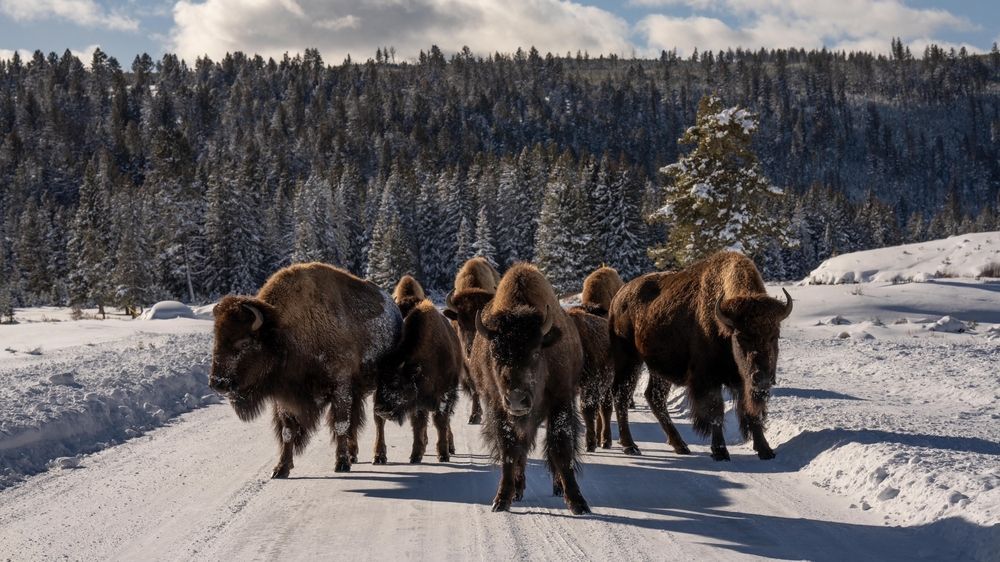
Winter changes everything in Yellowstone. The summer crowds disappear, snow quiets the landscape, and the park's animals move down into the open valleys of the Northern Range, where they're easier to find against a clean white backdrop. Bison plow the snow with their massive heads to reach grass. Elk and bighorn sheep gather on wind-swept slopes. Coyotes hunt for voles beneath the snowpack. And if luck is on your side, you may watch a wolf pack cross the Lamar Valley.
It's the most rewarding season to see Yellowstone's wildlife — and the one where the guide you choose matters most. Here's why so many winter travelers choose Obsidian Expeditions.
A tour we think you'll love

Yellowstone National Park Winter Wildlife Safari
1. We go where the wildlife is
In winter, most of Yellowstone's roads close to regular vehicles. The exception is the road through the Northern Range, from the North Entrance at Gardiner to Cooke City — and that's exactly where the animals spend the season. It's often called the "American Serengeti," and it's home to the Lamar Valley, one of the best places in North America to search for wild wolves.
Every one of our winter safaris is built around this corridor. You'll travel past Undine Falls, Junction Butte, Specimen Ridge, Slough Creek, and deep into the Lamar Valley to Soda Butte Creek and Pebble Creek — the stretch where bald eagles, bighorn sheep, bison, elk, coyotes, river otters, and wolves are most likely to appear.
2. Your guide is a naturalist, not just a driver
Spotting a wolf a mile away on a snowy ridge takes more than good eyesight. Our seasoned guides read tracks, know where packs have been moving, and understand how animals use the landscape in winter. They set up spotting scopes so you see the details, not just a dark speck on the horizon.
They're also storytellers. Between sightings, you'll hear how supervolcanoes and glaciers shaped the park, and about the Native American tribes, Army regiments, and conservationists whose history is written across it — including a stop at Fort Yellowstone, where the U.S. Army once protected the park.
3. Safety comes first in Yellowstone's toughest season
Winter in Yellowstone is beautiful and demanding. Daytime temperatures often sit between zero and 20°F, and a foot of snow can fall in a single day. Every Obsidian Expeditions guide carries avalanche safety, CPR, and Wilderness First Aid certifications, and we plan our routes and timing around weather, road conditions, and wildlife activity. You get to enjoy the adventure while we handle the conditions.
4. A private tour, built around you
Obsidian Expeditions offers private, premium tours — not crowded buses or shared vans full of strangers. Whether you're a couple, a family, a group of friends, or a corporate team, the day belongs to your group. Want to linger longer with a herd of bighorn sheep, or focus on photography? Your guide adjusts the pace to fit you.
We also prefer to work with our guests directly. Talking with you before your trip helps us understand who you are and what you hope to see, so we can shape an experience that truly fits.
5. Comfortable, warm, and fully equipped
You'll ride in a spacious all-wheel-drive Ford Transit van with a high roof and panoramic windows, so wildlife viewing continues even between stops. We bring the gear, too:
Spotting scopes and binoculars
Snowshoes and poles
Light breakfast, picnic lunch, snacks, and non-alcoholic beverages
All you need to bring is warm layers, a day pack, sunglasses, sunscreen, your camera — and a swimsuit.
6. A hot springs soak to end the day
After hours in the crisp winter air, there's nothing better than warming up in natural mineral water. Our safaris finish with a soak at the historic Chico Hot Springs Resort in Paradise Valley. Before that, you'll walk (or snowshoe) the Mammoth Hot Springs Upper Terrace, where steaming travertine formations glow against snow and ice — some of the most striking winter photography in the park.
Choose your winter safari
One-Day Winter Wildlife Safari
A full day in the Northern Range, departing Bozeman at 8:00 a.m. and returning around 5:30 p.m. You'll drive through Paradise Valley, pass beneath the Roosevelt Arch, track wildlife through the Lamar Valley, explore Mammoth Hot Springs, and finish with an hour-long soak at Chico Hot Springs. It's ideal if you're short on time but want the full winter Yellowstone experience.
Two-Day Winter Wildlife Safari
For the best odds of seeing wolves, choose our two-day safari. On day one, we travel through the park to Cooke City, a quiet mountain town tucked against the Absaroka Range, with stops at Fort Yellowstone, Calcite Springs Overlook, and a wildlife-focused afternoon in the Lamar Valley. Staying overnight in Cooke City puts us in the valley at sunrise and sunset — the two most productive times of day for wildlife sightings. Day two brings an early-morning return through the Lamar Valley and Slough Creek, a snowshoe along the Mammoth terraces, and an afternoon soak at Chico before we return to Bozeman.
You'll spend twice as much time in prime wildlife country — and that extra time is often what turns "maybe" into an unforgettable sighting.
Book your winter safari
Winter in Yellowstone is quiet, wild, and unforgettable, and the season is short. We're accepting winter safari bookings for December 7 through March 15, and private dates fill quickly.
To reserve your safari or ask about a custom itinerary, call 406.312.5592 or visit obsidianexpeditions.com. We'd love to help you plan your winter adventure in America's first national park.
