
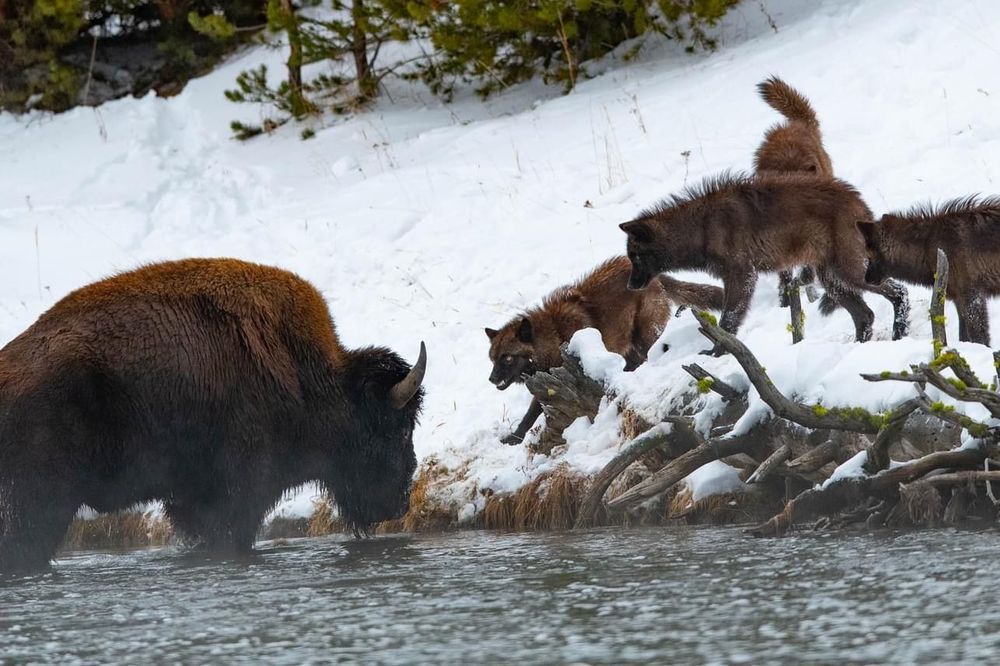
Winter turns Yellowstone into a quiet, snow-covered wilderness. From December through mid-March, deep snow pushes wildlife into the open valleys, the crowds disappear, and steam from hot springs and geysers rises into the frozen air. For many visitors, it's the most magical season of all, and the best time of year to see wolves.
Winter is also the park's most demanding season. Here's what to expect, how to prepare, and why a guided tour is the best way to experience it.
A tour we think you'll love

2-Day Yellowstone National Park Winter Wildlife Safari
What you'll see
Wolves. Winter is the best season to watch wolves. Their dark coats stand out against the snow, and the Lamar Valley is one of the best places in North America to see them.
Bison and elk. Herds gather in the lower valleys, where bison sweep away snow with their heads to reach the grass beneath.
Bighorn sheep, coyotes, foxes, and river otters. The Northern Range is full of winter wildlife, from sheep on rocky slopes to otters fishing in open water.
Bald eagles. Eagles patrol rivers and gather where wolves have made a kill.
Frozen landscapes. Ice-covered waterfalls, frost-coated trees, and the steaming travertine terraces at Mammoth Hot Springs create unforgettable scenes.
What you'll experience
Winter in Yellowstone is cold and snowy. Daytime highs often range from zero to 20 °F, and nights regularly drop below zero. A foot of snow can fall in a single day.
Most park roads close to regular vehicles in early November. The one exception is the road through the Northern Range, from the North Entrance at Gardiner through Mammoth Hot Springs and the Lamar Valley to Cooke City, which stays open all winter. That's exactly where most of the wildlife spends the season. From mid-December to mid-March, the park's interior, including Old Faithful and the Grand Canyon of the Yellowstone, can only be reached by guided snowmobile or snowcoach.
The reward is solitude. You'll often have wildlife viewing areas nearly to yourself.
How to prepare
Dress in layers. Start with a synthetic or wool base layer, add an insulated mid-layer, and finish with a waterproof, windproof jacket and pants. Avoid cotton, which stays cold when wet.
Protect your extremities. Bring a warm hat, gloves or mittens, thick wool socks, and insulated waterproof boots.
Sun and snow glare. Sunglasses or goggles and sunscreen are essential, since snow reflects sunlight.
Keep batteries warm. Cold drains phone and camera batteries quickly. Bring a charger and keep spares in an inside pocket.
Pack a swimsuit. A soak in a natural hot spring is the perfect way to end a winter day.
Plan for delays. Snowstorms, icy roads, and wildlife on the road can slow travel. Build in extra time and bring patience.
Why a guided tour helps
Winter is the season when a guide matters most. Icy roads, extreme cold, and wide-open valleys make expertise essential.
We go where the wildlife is. Our winter safaris focus on the Northern Range and the Lamar Valley, and our guides track wolf packs and other wildlife daily. Spotting scopes and binoculars bring distant animals up close.
We drive the winter roads. You'll ride in a warm, all-wheel-drive Ford Transit van with panoramic windows, while we handle the snow and ice.
Safety in extreme conditions. Our guides carry avalanche safety, CPR, and Wilderness First Aid certifications.
We bring the gear. Snowshoes, poles, spotting scopes, and binoculars are provided, along with breakfast, lunch, snacks, and drinks.
A warm finish. Our tours end with a soak at the historic Chico Hot Springs in Paradise Valley.
For families: Spotting a wolf in the snow is a moment kids never forget. Our guides keep everyone warm, safe, and engaged, and booster seats are available on request.
For friend groups: A private winter safari is an unforgettable shared adventure, from snowshoeing at Mammoth to a hot springs soak together at the end of the day.
For active seniors: Winter doesn't have to mean hard travel. Much of the wildlife viewing happens from a heated van with large windows, with short walks and optional snowshoeing at your own pace.
Book your winter safari
We're accepting winter bookings from December 7 through March 15. Choose our one-day Winter Wildlife Safari or our two-day safari with an overnight in Cooke City, which puts us in the Lamar Valley at sunrise and sunset, the best times for wildlife.
To reserve your winter safari, call 406.312.5592 or visit obsidianexpeditions.com.
